|
Stormy Weather Special - What Happens to All That Excess Water?
We’ve received a lot of rain this week. A question people sometimes ask the Chamber: why does so much of the Monterey Peninsula’s winter water flow go into the ocean instead of being collected and used?
We know the answer to that question.
Central Coast Rivers End Up in Lagoons/Estuaries Next to the Ocean
First, the hydrological and geographical basics. In the dry season, our region’s major rivers (the Salinas River and Carmel River) flow into lagoons/estuaries that are blocked by sand bars. In the rainy season, natural water flow pierces the sand bars, or the government pierces them using excavation equipment to control flooding. In very dry years, the sand bars never open at all.
Three similar but smaller lagoons/estuaries were once located on the Monterey Peninsula between the Salinas River and the Carmel River, but they have been engineered into artificial lakes. Today they are known as Roberts Lake/Laguna Grande in Seaside (which were once a single estuary but now are separated by Del Monte Boulevard), Lake Del Monte on the Naval Support Services campus in Monterey, and Lake El Estero in Monterey. There are also two small lakes in Monterey related to Lake El Estero but separated by Fremont Boulevard: Lagunita Mirada and a sediment basin called Washerwoman’s Pond.
These lakes are fed by intermittent creeks (such as Hartnell Creek, Iris Canyon Creek, Don Davhee Creek, Majors Creek, Aguajito Creek, Josselyn Canyon Creek, and Canyon Del Rey Creek), municipal stormwater systems, and some groundwater percolation. These lakes receive quick and substantial water flow from winter storms because precipitation cannot percolate into the granitic base of the Monterey Peninsula under the surface soil. In the summer, these creeks dry up.
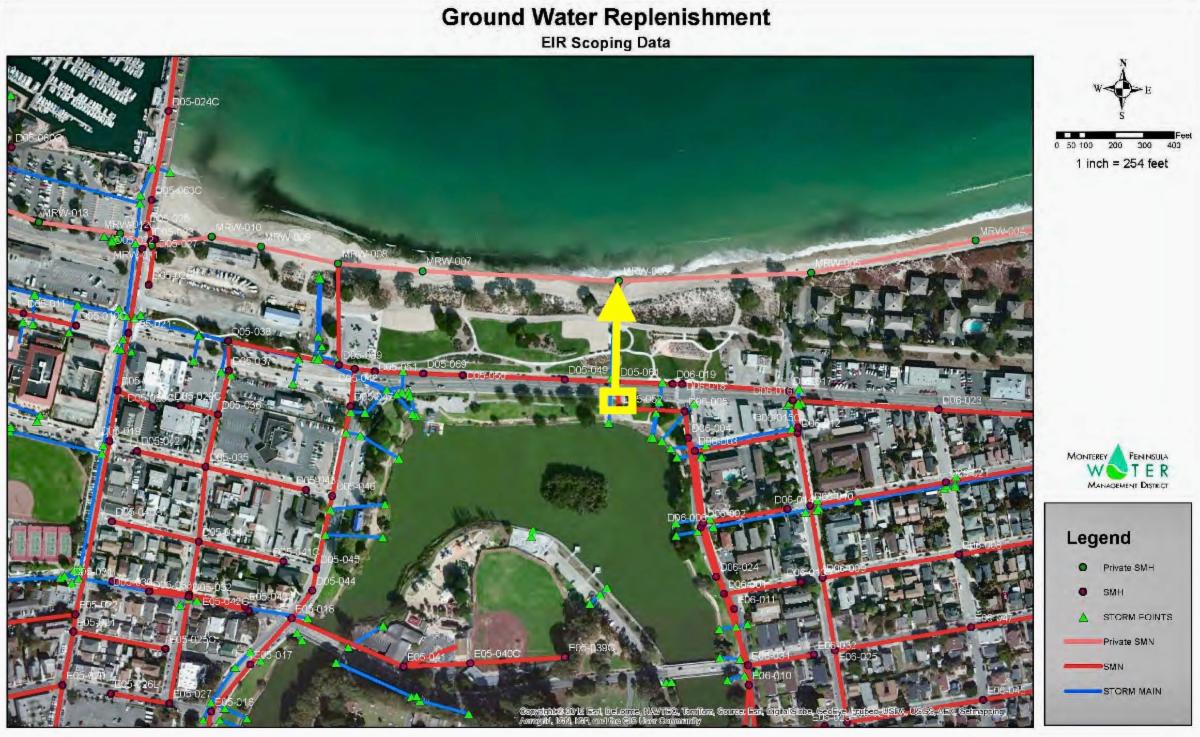
When storms arrive, excess water from these lakes is conveyed through culverts to outfalls on the beach and then into Monterey Bay. In the case of Lake El Estero, the City of Monterey controls water levels with a pump station and manages release of water before and during storms to prevent flooding.
Can Something Be Done With This Excess Water Going to the Ocean?
|